Research & Publications

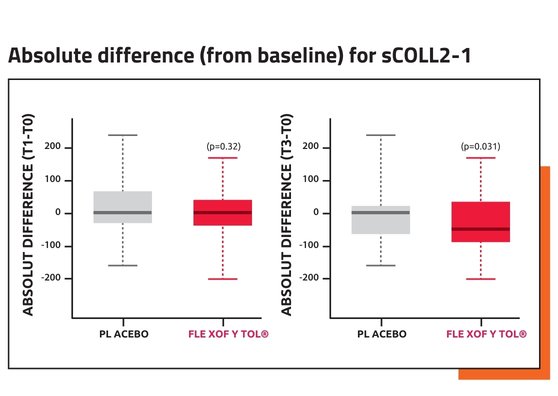
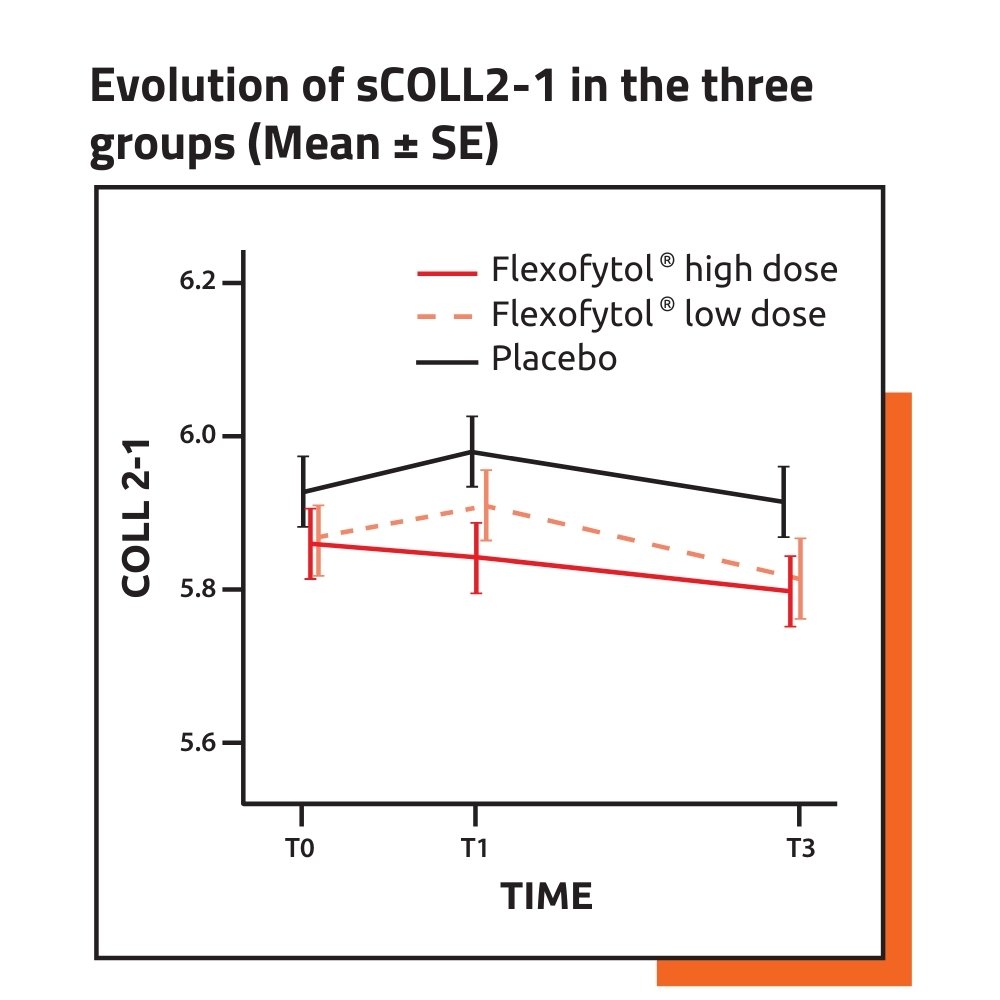
1. FLEXOFYTOL® DECREASED SERUM COLL2-1 LEVELS, A BIOMARKER OF CARTILAGE DEGRADATION

Comparison of time evolution curves showed that sCOLL2-1 levels were lower in the treated groups, but differences were not significant. Looking at absolute difference, complementary analyses of sCOLL2-1 performed on PP population revealed a significant difference between treated (pooled low and high dose groups) and placebo groups at T3 values. 

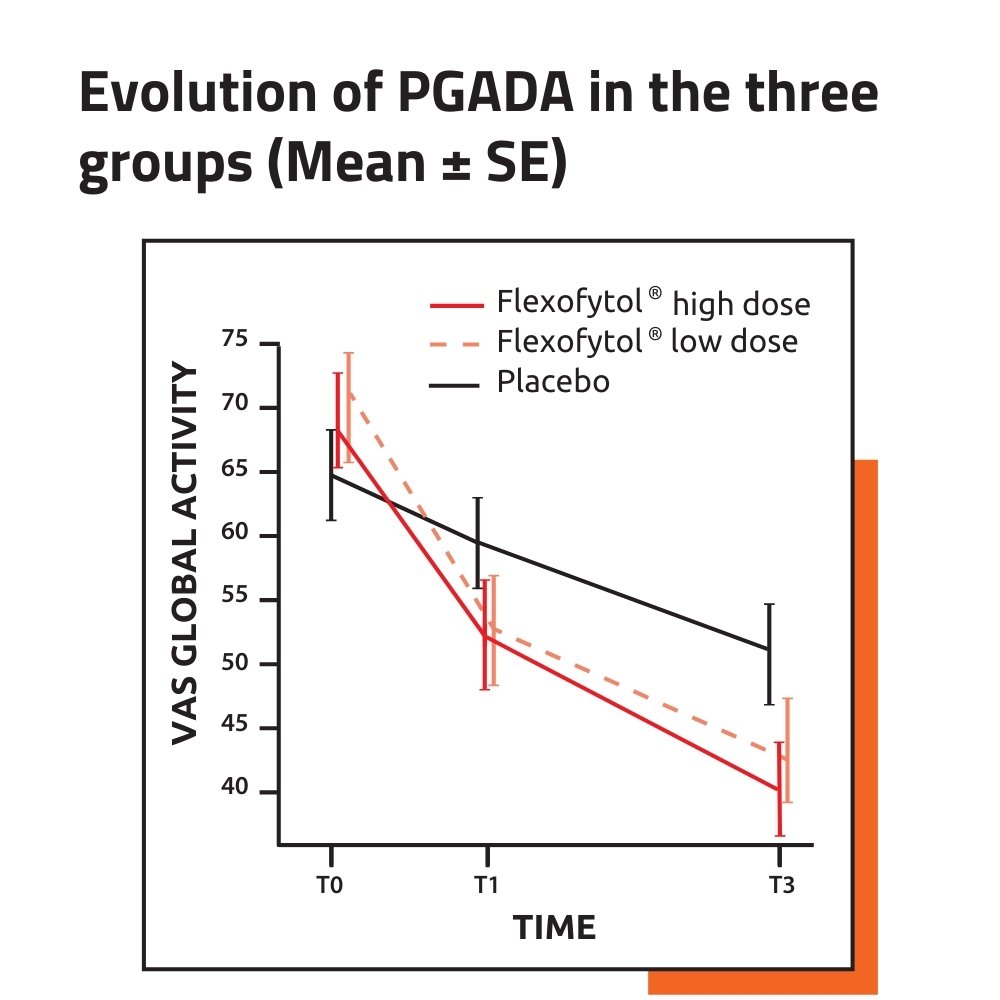
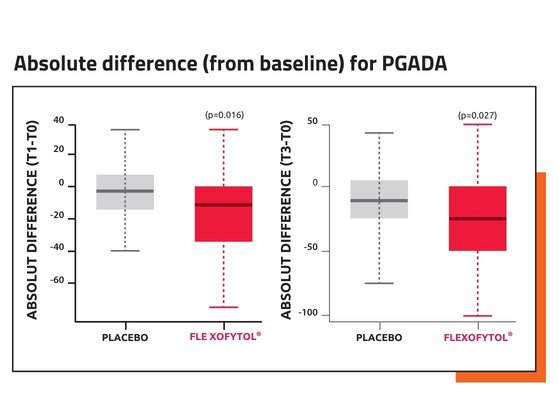
2. FLEXOFYTOL® DECREASED PATIENT GLOBAL ASSESSMENT OF DISEASE ACTIVITY

The decrease in PGADA overtime was higher in Flexofytol® groups after one and three months than in placebo but the difference between groups was not significant.

Using pooled values for treated groups (Flexofytol® high plus low dose), PGADA was significantly reduced in Flexofytol® group compared to placebo at T1 and T3 (Figure 4)

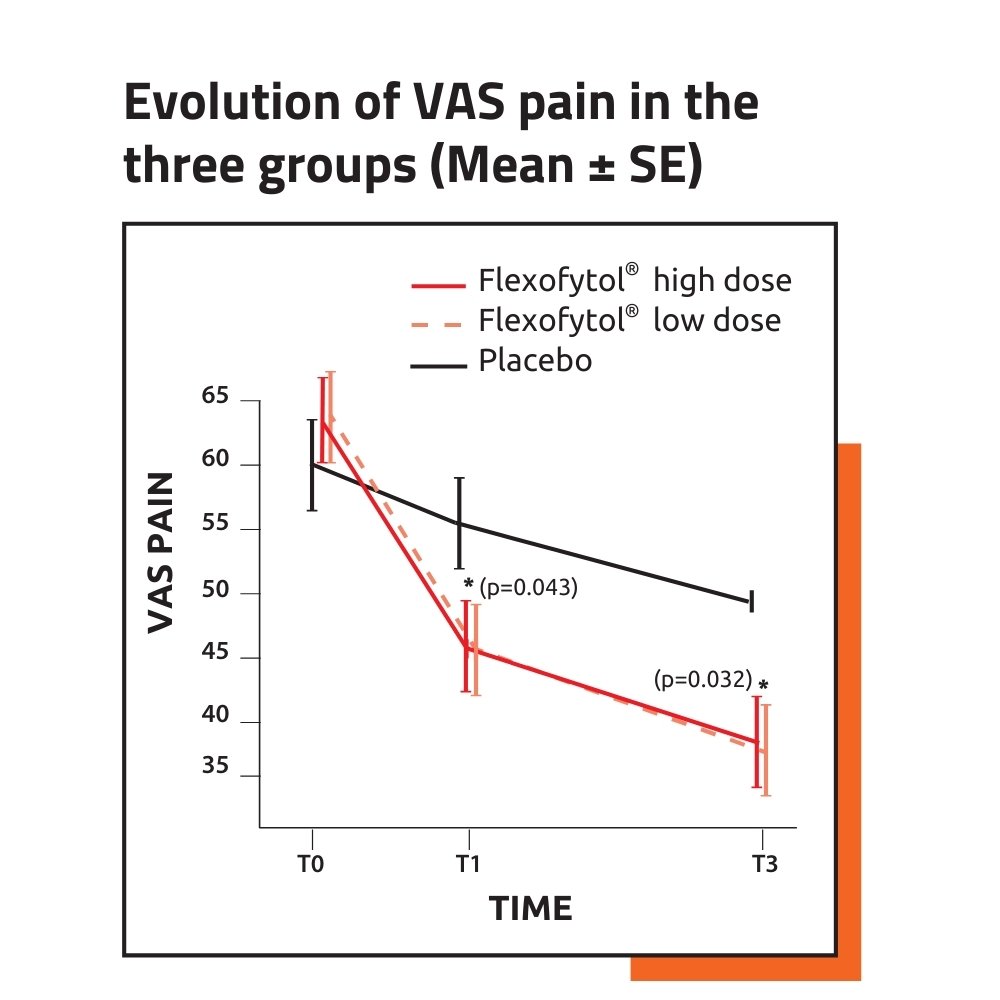
3. FLEXOFYTOL® DECREASED OSTEOARTHRITIS PAIN QUICKLY AND SIGNIFICANTLY

Knee pain over the last 24 hours significantly decreased in the three groups with time. Interestingly, pain decrease was already significant after 1 and 3 months in the Flexofytol® groups, while significance was only reach after 6 months in the placebo group.

Using complementary analyses in the ITT population and after three months of treatment, pain relief was significantly higher in the Flexofytol® groups than in the placebo (p=0.032). After one month of treatment, the VAS value was only significantly decreased in the low dose Flexofytol® group (p=0.043).

4. FLEXOFYTOL® REDUCED NSAIDS CONSUMPTION
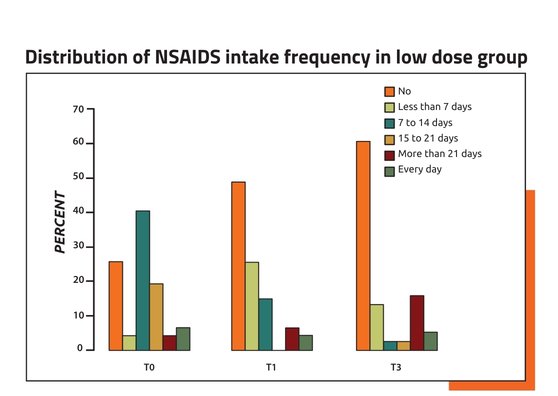
In Full Analysis Sets (FAS) population, Flexofytol® low dose significantly decreased the intake frequency of NSAIDS at the different time points (p=0.038 at T1, p=0.029 at T3). More precisely, subject of the low dose group presented a significant shift from high to lower frequency of intake at each time point, as compared to baseline.