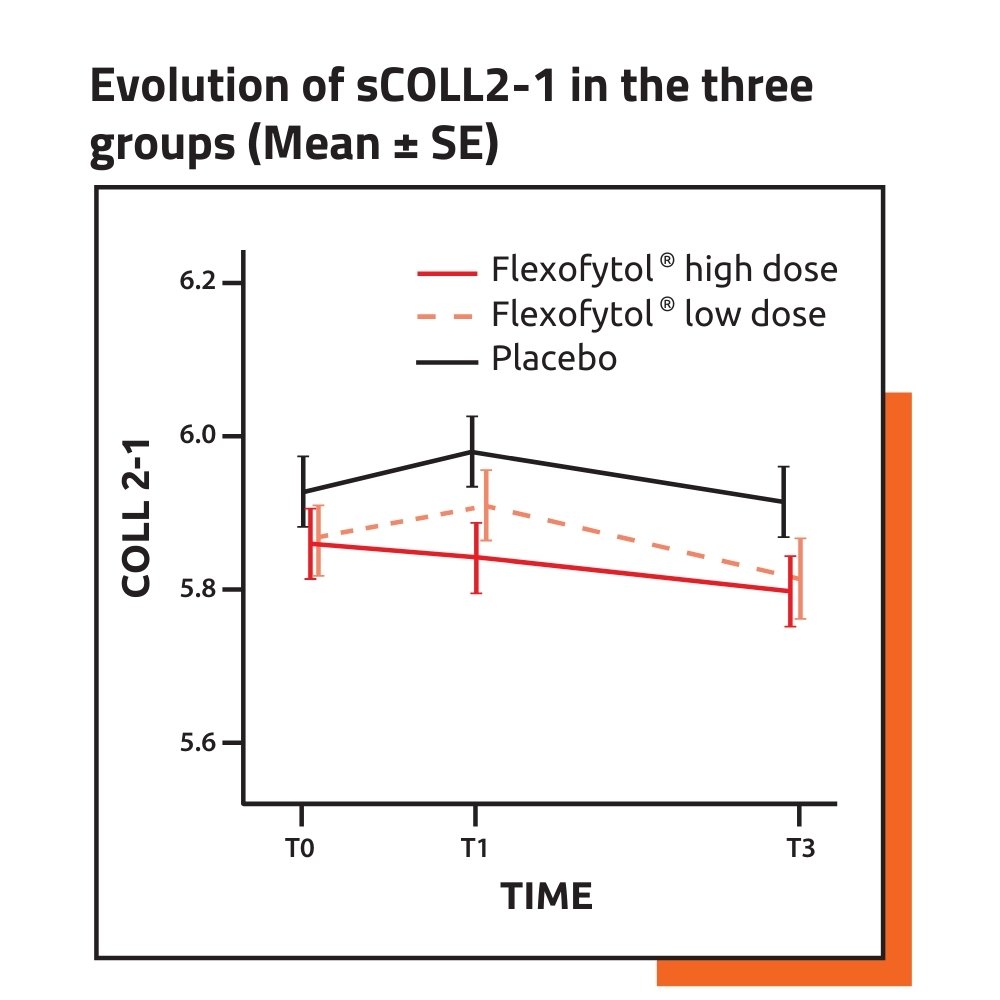
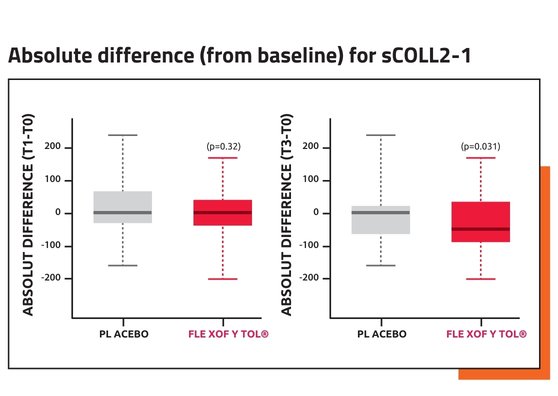
Comparison of time evolution curves showed that sCOLL2-1 levels were lower in the treated groups, but differences were not significant. Looking at absolute difference, complementary analyses of sCOLL2-1 performed on PP population revealed a significant difference between treated (pooled low and high dose groups) and placebo groups at T3 values.
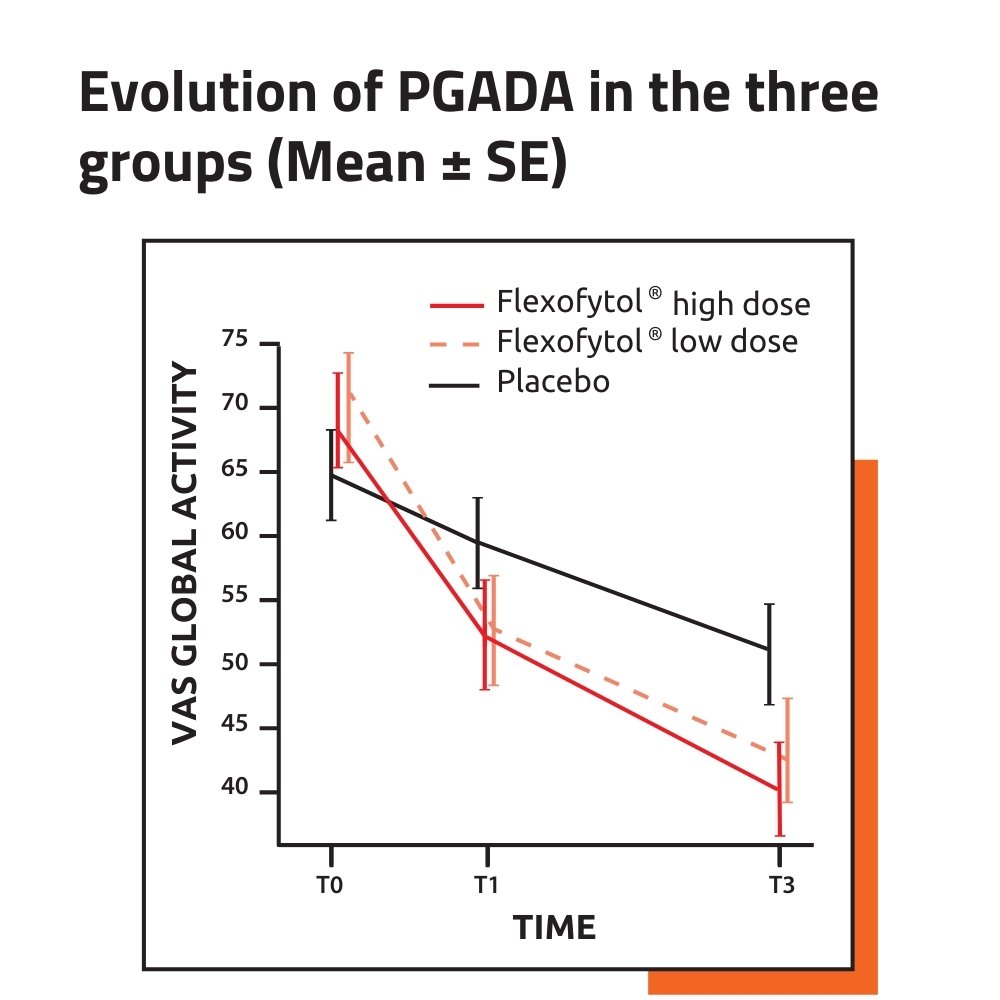
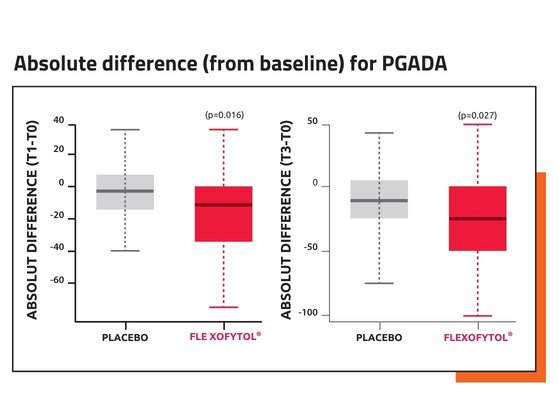
The decrease in PGADA overtime was higher in Flexofytol® groups after one and three months than in placebo but the difference between groups was not significant.
Using pooled values for treated groups (Flexofytol® high plus low dose), PGADA was significantly reduced in Flexofytol® group compared to placebo at T1 and T3 (Figure 4)
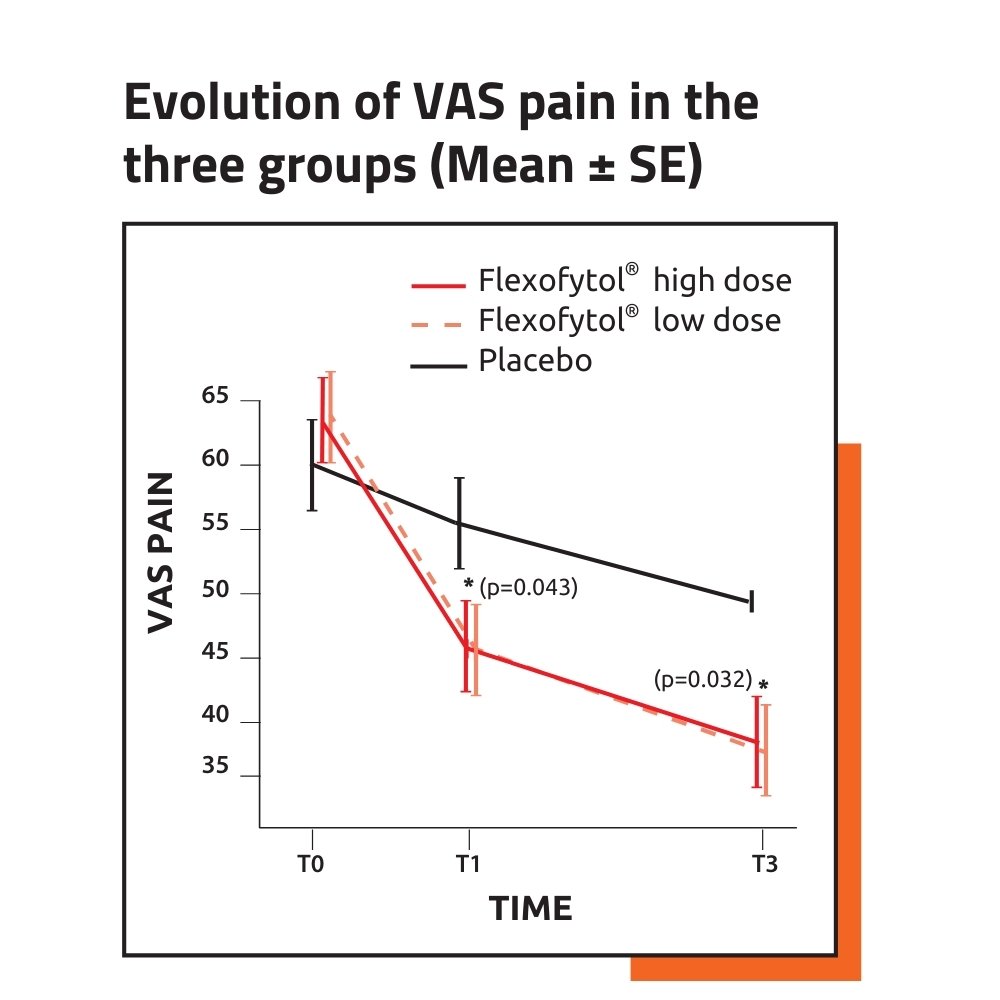
Knee pain over the last 24 hours significantly decreased in the three groups with time. Interestingly, pain decrease was already significant after 1 and 3 months in the Flexofytol® groups, while significance was only reach after 6 months in the placebo group.
Using complementary analyses in the ITT population and after three months of treatment, pain relief was significantly higher in the Flexofytol® groups than in the placebo (p=0.032). After one month of treatment, the VAS value was only significantly decreased in the low dose Flexofytol® group (p=0.043).
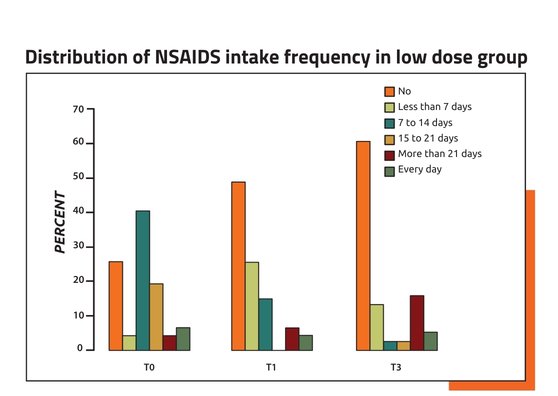
In Full Analysis Sets (FAS) population, Flexofytol® low dose significantly decreased the intake frequency of NSAIDS at the different time points (p=0.038 at T1, p=0.029 at T3). More precisely, subject of the low dose group presented a significant shift from high to lower frequency of intake at each time point, as compared to baseline.